Course content
10 modules. Open a module to see what it covers.
1 Introduction to Digital MarketingObjectives · topics · practical exercise
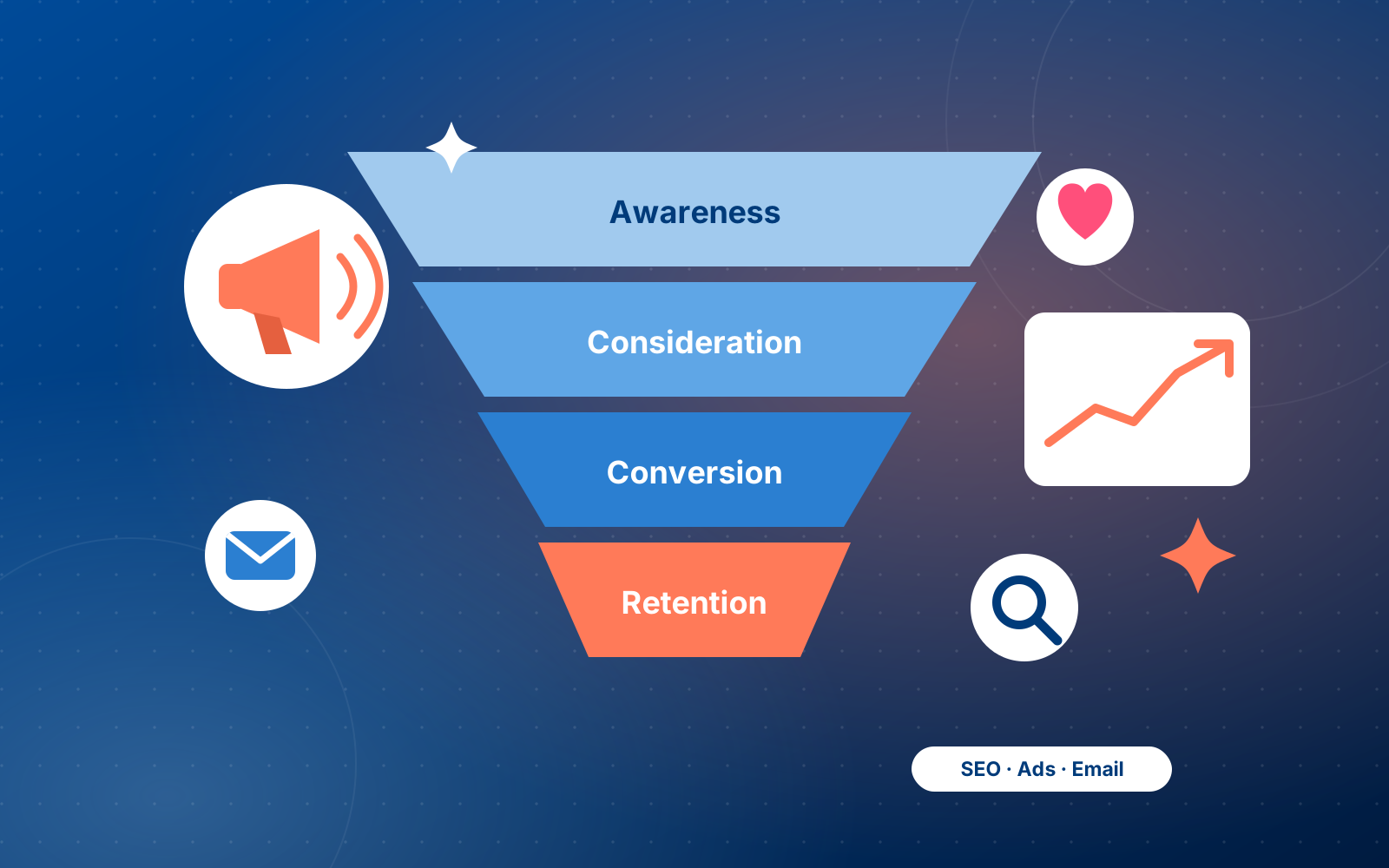
This module provides a comprehensive overview of digital marketing and its role in the modern business landscape. Learners will examine fundamental channels, tools, and techniques, while learning how to map customer journeys using the digital marketing funnel.
Learning objectives
By the end of this module, learners will be able to:
- Explain the foundational concepts of digital marketing and its importance in modern business strategy.
- Differentiate between core digital marketing channels, tools, and tactics.
- Map and analyze the stages of the digital marketing funnel to guide customer journeys effectively.
Topics covered
- Introduction to digital marketing and ecosystem overview
- Key digital marketing channels, tools, and techniques
- The digital marketing funnel (Awareness, Consideration, Conversion, Retention)
- Mapping customer journeys across digital touchpoints
Practical exercise
- Digital Channel Audit: Analyzing an existing business brand and categorizing its active digital marketing channels.
- Funnel Mapping Exercise: Mapping out a end-to-end customer journey and assigning relevant marketing activities to each stage of the digital marketing funnel.
Expected outcome
- Strategic understanding of digital marketing principles.
- Ability to map user behavior through a structured sales and marketing funnel.
2 Social Media Marketing & ManagementObjectives · topics · practical exercise
This module focuses on building, optimizing, and automating brand presence across major social media platforms like Facebook and Instagram. Learners will practice content planning, scheduling, hashtag optimization, organic reach strategies, and paid campaign promotion using Ads Manager.
Learning objectives
By the end of this module, learners will be able to:
- Set up and optimize professional social media pages on Facebook and Instagram.
- Develop social media timetables and content calendars to streamline page management.
- Automate cross-platform posting using tools like Buffer.
- Apply effective hashtag strategies to boost post reach.
- Execute paid post boosts and manage campaigns via Facebook/Meta Ads Manager.
Topics covered
- Social media platform setup and optimization (Facebook & Instagram)
- Content calendar design, timetables, and observance templates
- Social media automation tools (e.g., Buffer)
- Hashtag strategies and organic reach optimization
- Paid social advertising: Boosting posts vs. Ads Manager campaigns
Practical exercise
- Page Setup & Optimization: Setting up or auditing a business page on Facebook/Instagram with complete assets (bio, CTA, visuals).
- Content Planning & Automation: Creating a 1-week content calendar and scheduling automated posts using Buffer.
- Ad Campaign Creation: Setting up a draft ad campaign in Meta Ads Manager, defining target demographics, budget, and creative assets.
Expected outcome
- Hands-on proficiency in managing and automating social media channels.
- Capability to design, deploy, and manage paid social ad campaigns.
3 Social Media Analytics & OptimizationObjectives · topics · practical exercise
This module covers performance tracking and data analysis for social media channels and paid ad campaigns. Learners will analyze key performance indicators (KPIs) to refine campaign strategy and maximize return on investment (ROI).
Learning objectives
By the end of this module, learners will be able to:
- Track and interpret key social media performance metrics across native insights and analytics tools.
- Evaluate the effectiveness and return on investment (ROI) of paid social campaigns.
- Make data-driven optimizations to continuously improve campaign performance.
Topics covered
- Key Performance Indicators (KPIs) in social media (Reach, Impressions, Engagement, CTR, Conversion Rate)
- Native analytics tools (Facebook Insights, Instagram Insights)
- Paid campaign reporting and ROI assessment
- Iterative optimization and audience retargeting principles
Practical exercise
- Analytics Report Construction: Analyzing a sample dataset or active page insights to compile a social media performance report.
- Campaign Optimization Exercise: Identifying underperforming ads within a campaign dataset and proposing budget/creative adjustments.
Expected outcome
- Skill in reading and evaluating social media performance metrics.
- Ability to optimize ad spend and organic strategy based on actionable data.
4 Content Marketing & BloggingObjectives · topics · practical exercise
This module covers strategic content creation through blogging platforms such as Blogger. Learners will master blog creation, structure content for maximum engagement, apply Search Engine Optimization (SEO) fundamentals, and explore monetization strategies like Google AdSense.
Learning objectives
By the end of this module, learners will be able to:
- Build and configure functional blog sites using platforms like Blogger.
- Craft engaging, SEO-optimized blog posts designed to rank on search engines.
- Implement content monetization strategies using ad networks like Google AdSense.
Topics covered
- Introduction to content marketing and blogging strategy
- Setting up and customizing a blog on Blogger
- On-page SEO basics for articles (keywords, headings, meta descriptions)
- Monetization strategies and Google AdSense integration
Practical exercise
- Blog Creation: Setting up a blog platform, applying layout themes, and configuring basic site settings.
- SEO Article Writing: Writing and publishing an SEO-optimized blog post with structured headings, imagery, and target keywords.
Expected outcome
- Operational knowledge of blog publishing platforms.
- Ability to create SEO-friendly written content that drives organic traffic and revenue potential.
5 Google Ads & Pay-Per-Click (PPC) AdvertisingObjectives · topics · practical exercise
This module introduces Search Engine Marketing (SEM) using Google Ads and Google Analytics. Learners will gain hands-on experience in keyword research, copywriting for ads, setting up Pay-Per-Click (PPC) search campaigns, and tracking performance metrics.
Learning objectives
By the end of this module, learners will be able to:
- Perform effective keyword research to uncover high-intent search queries.
- Draft high-converting ad copy tailored to target audiences.
- Set up, structure, and manage Pay-Per-Click (PPC) search campaigns in Google Ads.
- Connect campaign performance tracking using Google Analytics.
Topics covered
- Overview of Pay-Per-Click (PPC) and Google Search Network
- Keyword research methods, match types, and intent analysis
- Crafting compelling headline and description ad copy
- Campaign setup: bidding strategies, targeting, budgets, and ad extensions
- Linking Google Ads with Google Analytics for conversion tracking
Practical exercise
- Keyword Research Plan: Conducting a keyword research exercise for a business niche using Google Keyword Planner.
- Google Ads Campaign Build: Structuring a complete Search campaign draft, including ad groups, negative keywords, budget settings, and compelling ad copy.
Expected outcome
- Competency in building targeted search ad campaigns.
- Mastered keyword strategy and PPC cost optimization techniques.
6 Google Business Page ManagementObjectives · topics · practical exercise
This module focuses on local Search Engine Optimization (SEO) through Google Business Profile management. Learners will learn how to set up, verify, optimize, and manage local listings to enhance local search visibility and drive customer actions.
Learning objectives
By the end of this module, learners will be able to:
- Create, claim, and verify a Google Business Profile listing.
- Optimize listing components (NAP consistency, categories, descriptions, photos, and services).
- Manage customer reviews, posts, and Q&A features to drive local engagement.
Topics covered
- Fundamentals of local SEO and Google Maps optimization
- Creating and verifying Google Business Profile accounts
- Profile optimization strategies (photos, services, business details)
- Review management, post updates, and local customer interactions
Practical exercise
- Google Business Profile Audit/Setup: Creating or auditing a Google Business Profile listing against optimization benchmarks.
- Local Engagement Workflow: Drafting a series of Google Business posts and standardized responses for positive and negative customer reviews.
Expected outcome
- Mastery in maximizing local search visibility for physical or service-area businesses.
- Improved ability to attract foot traffic and direct inbound customer inquiries.
7 Video Advertising & YouTube MarketingObjectives · topics · practical exercise
This module covers video content strategy and channel optimization on YouTube. Learners will explore channel creation, video SEO, audience engagement techniques, and setup basics for video ad campaigns.
Learning objectives
By the end of this module, learners will be able to:
- Build and customize an optimized YouTube channel for brand visibility.
- Implement YouTube SEO techniques (titles, tags, descriptions, thumbnails) to drive views.
- Plan engaging video content strategies tailored to target audiences.
- Understand the fundamentals of running video advertising campaigns on YouTube.
Topics covered
- Channel setup, branding, and layout customization
- YouTube SEO: Title formulation, tags, descriptions, thumbnails, and playlists
- Video content strategy and audience retention tactics
- Introduction to YouTube video ad formats and setup via Google Ads
Practical exercise
- YouTube Channel Branding: Customizing a YouTube channel layout, about section, banner, and channel keywords.
- Video SEO Optimization: Optimizing a video upload draft with compelling titles, keyword-rich descriptions, tags, and custom thumbnail ideas.
Expected outcome
- Proficiency in launching and optimizing YouTube video channels.
- Practical knowledge of video content marketing and YouTube search rankings.
8 Lead Generation & Landing Page OptimizationObjectives · topics · practical exercise
This module explores methods for capturing, tracking, and converting high-quality leads. Learners will build lead intake assets using Google Forms and dedicated landing pages, while utilizing web analytics to track lead generation performance.
Learning objectives
By the end of this module, learners will be able to:
- Design lead capture tools using platforms like Google Forms and dedicated landing page builders.
- Structure high-converting lead magnets and call-to-action (CTA) funnels.
- Track, measure, and optimize lead capture conversion rates using analytics.
Topics covered
- Principles of lead generation and lead magnet strategies
- Form creation and data capture setup using Google Forms
- Landing page design principles and conversion rate optimization (CRO)
- Tracking lead funnel metrics and conversion events
Practical exercise
- Form & Lead Magnet Setup: Creating a customized lead capture form using Google Forms tailored to a specific product or service offer.
- Landing Page Layout Draft: Designing a high-converting landing page wireframe complete with headlines, lead magnet offer, form embed, and CTA buttons.
Expected outcome
- Ability to build operational lead generation mechanisms.
- Understanding of how to optimize forms and landing pages for maximal response rates.
9 Email Campaign Creation with MailchimpObjectives · topics · practical exercise
This module focuses on email marketing as a driver for lead nurturing and customer conversion. Using Mailchimp, learners will design responsive email templates, build subscriber segments, set up campaigns, and analyze performance reports.
Learning objectives
By the end of this module, learners will be able to:
- Import, segment, and manage email subscriber lists in Mailchimp.
- Design mobile-responsive email templates aligned with campaign goals.
- Plan, execute, and monitor automated email marketing campaigns.
- Evaluate email analytics (open rates, click-through rates, unsubscribes) to improve engagement.
Topics covered
- Fundamentals of email marketing and compliance (CAN-SPAM, audience consent)
- Mailchimp interface, list management, and audience segmentation
- Email design best practices, copy writing, and calls-to-action
- Campaign execution, A/B testing basics, and delivery scheduling
- Email analytics: Open Rate, Click-Through Rate (CTR), Bounce Rate, and Conversions
Practical exercise
- Audience Setup & Segmentation: Importing a test contact list into Mailchimp and applying custom tags and audience segments.
- Email Campaign Design: Building a visual email marketing campaign draft with custom branding, clear copy, and CTA buttons.
- Analytics Evaluation: Reviewing a sample email campaign report to identify key engagement metrics and areas for copy improvement.
Expected outcome
- Mastery of end-to-end email marketing software (Mailchimp).
- Capability to design, run, and measure effective lead-nurturing email campaigns.
10 AI Content Creation & Marketing ToolsObjectives · topics · practical exercise
This module covers modern Artificial Intelligence tools applied to digital marketing workflows. Learners will practice using generative AI for copy drafting, graphic creation, ideas generation, and workflow automation across all digital marketing channels.
Learning objectives
By the end of this module, learners will be able to:
- Identify and integrate relevant AI tools into daily digital marketing workflows.
- Prompt AI systems to generate marketing copy, blog posts, ad scripts, and social media captions.
- Leverage AI tools for visual content assistance, graphic design generation, and brainstorming.
- Maintain quality control and brand consistency when utilizing AI-generated materials.
Topics covered
- Overview of AI in digital marketing (text, image, and strategic ideation)
- Prompt engineering fundamentals for marketers
- AI tools for ad copywriting, blog drafting, and email messaging
- AI tools for visual asset creation and social graphic generation
- Quality control, fact-checking, and brand voice alignment for AI output
Practical exercise
- AI Prompt Strategy Task: Writing structured prompts to generate a full campaign kit (3 social media captions, 1 email blast draft, and 2 ad headlines).
- AI-Assisted Content Suite Creation: Combining text and image AI generation tools to create a complete visual and written social media campaign package.
Expected outcome
- Accelerated marketing workflow speed using modern AI content platforms.
- Capability to produce multi-channel marketing copy and creative assets rapidly using AI prompts.